Tuesday, September 24, 2013

FESTIVAL COUNTDOWN: Get to Know the Team Behind THE THREE LITTLE PIGS

An interview with George Stiles and Anthony Drewe, writers of the upcoming Festival show The Three Little Pigs, about the ups and downs of writing for children, the insights gained from international productions and their upcoming performance in the Festival of New Musicals. Interview conducted by NAMT's Program Intern Audra LaBrosse.  

NAMT: Three Little Pigs is a familiar story to most people. During your writing, how did you go about updating the tale and adding original touches?
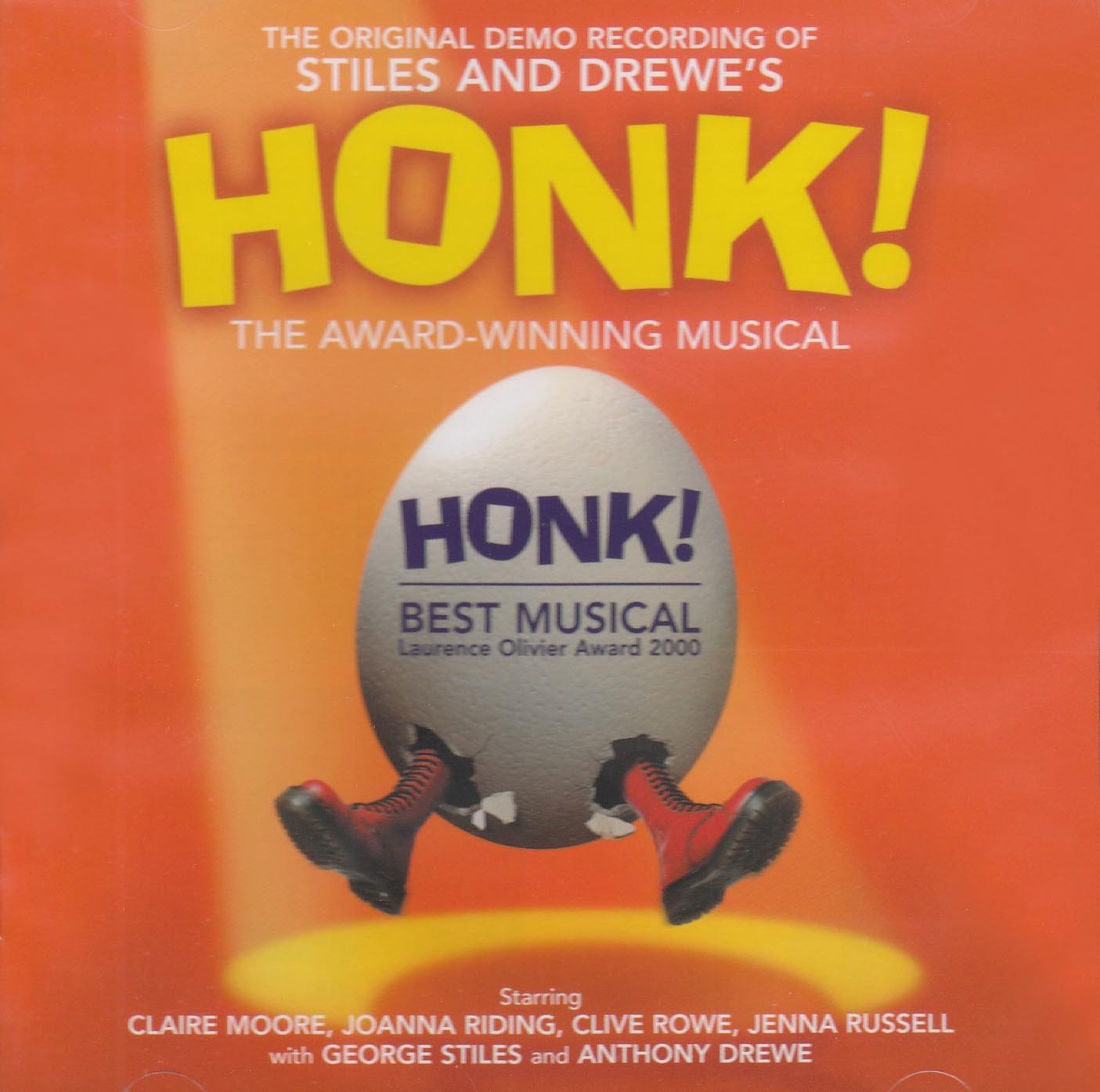
George Stiles: Well, we did a similar thing with Honk!, our re-take of The Ugly Duckling. We enjoy making the characters as "human" as possible, and updating the dialogue so it feels contemporary and classic all at the same time! Family dynamics always interest us, how brothers and sisters manage to get along with each other, even though they're often very different characters. So with the Pigs, we liked the idea that the father of the family had been "taken" by the Big Bad Wolf, so there's a tension from the outset and makes the Mother a strong but put-upon figure who's had to raise her piglets single-handed. We also thought a Wolf who reckoned he was "misunderstood" was fun... after all, he's just doing what wolves do!

NAMT: This show is part of a "trio of trilogies.” Tell us a bit more about that concept.
GS: That's all [Anthony’s] fault. He's greedy. One's never enough. But what's great about it is that a theatre can choose to "mix and match" the shows. The second is Goldilocks and the Three Bears, which we premiered earlier this year - and the final part will be The Three Billy Goats Gruff. Each is 45-50 minutes long, so you can do 1, 2 or 3 of them with the same 5 actors, and design a simple set that works for all three. That way, theatres can program the shows for daytime or evening presentations. 

NAMT: Can you tell us briefly how you went about updating the other stories in the trilogy?
Anthony Drewe: Well we haven't written The Three Billy Goats Gruff yet, but Goldilocks And The Three Bears is ready to go and played very successfully in Singapore earlier this year. Our self-imposed conundrum in writing the trilogy was that we wanted it to be possible to perform all three shows with the same five actors. In the story of Goldilocks there are traditionally only 4 characters, but this limitation actually gave us our way into retelling the story. We first meet Goldi as she

Friday, September 20, 2013

FESTIVAL COUNTDOWN: On the Record

A guest blog entry from Michael Shaieb, writer of The Astonishing Return of... The Protagonists! to be presented at this year's Festival of New Musicals.  

About fifteen years ago when I graduated from the NYU Graduate Musical Theatre Writing program, I was faced with the reality of what I would do for a living. I had some recording equipment and thought that perhaps I could start a recording studio. When I met my partner, Brent Lord, who had the technical knowledge, we formed a company which later became FatLab Music. We specialized in recording demos for music theatre writers and performers.

When I began writing The Protagonists with my collaborator, Kevin del Aguila, the question was how do we record our show to convey the different stylistic choices we created for our world. The Protagonists contains a world of

Wednesday, September 18, 2013

FESTIVAL COUNTDOWN: Get to Know THE BOY WHO DANCED ON AIR


An interview with Charlie Sohne and Tim Rosser, writers of the upcoming Festival show The Boy Who Danced on Air, about the careful process of writing a show about the Afghani tradition of Bacha bazi, which literally translated means “boy play,” a practice where wealthy men take in poorer boys and train them to dance. Interview conducted by NAMT's Program Intern Audra LaBrosse.  


NAMT: Bacha bazi is not a well-known practice to a Western audience. How did you learn about this tradition and what about it inspired you to write a musical centered on it?
Charlie Sohne: We saw a documentary about bacha bazi called The Dancing Boys of Afghanistan and it kind of smacked us in the face. The access that the filmmaker got to both the men and boys involved was really amazing and the existence of the practice brought up so many questions that to us felt universal to all cultures, including our own. The discussions we had afterwards about religion, the different ways sexuality expresses itself and the intersection of tradition, morality and a community’s power structure made us feel like there was a lot there to be mined.

Tim Rosser: We were also very interested at the time in finding material that “demanded to be musicalized” – as in, it would feel like a let down to tell this story without music because music and dance are essential to this subject matter.

NAMT: Was there a moment of this documentary that stuck out most, that you saw and imagined a dramatic moment immediately?
CS:  The most striking moment for me was when one of the boys talks about growing up and owning boys of his own. It was absolutely fascinating to hear how matter of fact it was and how much of an inevitability it was for him. 

TR: And that moment was actually the basis and inspiration for the song “When I Have A Boy Of My Own” that ends Act I. (Editors note: listen to a clip from this song on the Festival info page)

NAMT: Historical and cultural accuracy are important in the writing of any show, and especially one with a sensitive subject matter like The Boy Who Danced on Air. What has the process of writing the show been like, keeping this in mind?
CS: Our first step was

Monday, September 16, 2013

FESTIVAL COUNTDOWN: A Trilogy of Trios

A guest blog entry from George Stiles, writer of The Three Little Pigs to be presented at this year's Festival of New Musicals.  

The Three Little Pigs was written in response to a specific brief from the Singapore Repertory Theatre. Over the past few years, they have built up their younger audiences - from 3 years and over - with their dedicated "The Little Company." Singapore has a huge number of school-age children, for whom English is their first language, with Malay, Mandarin or Hokkien as their second. SRT realised that this audience was barely catered for with live entertainment and that, aside from large, highly-visible branded tours, there was a lack of high quality musical theatre material.

Since we already had considerable experience writing for a truly "family" audience (Honk!, Mary Poppins, Just So, Peter Pan) we were intrigued to see how we could adapt our style to cater for an audience of 3 years and upwards. We were encouraged to find a story that "sold itself" by having title recognition, and that had a small cast to make the numbers work. We briefly thought of Snow White, before realizing it inherently demanded at least 8 in the cast! So we soon settled on The Three Little Pigs - immediately wondering if we could write a "trilogy of trios" - and move on to Goldilocks and the Three Bears and The Three Billy Goats Gruff. Well, we figured the "rule of three" works even better as the rule of three threes!

We quickly found a sense of liberation knowing that we wanted the show to run at 45-50 minutes, have just 5 in the cast and be understood by very young children as well as be enjoyed by their older brothers, sisters, parents and grandparents. As kids, we both remember loving

Monday, September 9, 2013

FESTIVAL COUNTDOWN: Get to Know ANALOG AND VINYL

An interview with Paul Gordon, writer of the upcoming Festival show Analog and Vinyl, about revisiting his musical roots and just how different developing Analog and Vinyl is from working on his 2006 Festival show Emma. Interview conducted by NAMT's Program Intern Audra LaBrosse. 

NAMT: Analog and Vinyl marks your second time as part of the Festival. What part of your experience with Emma in 2006 drew you back?
PAUL GORDON: The Festival is such a wonderful opportunity, not only to show your work to a large theatre community, but it also allows the authors to see their work in an entirely different light, as we are required to present the essence of the work in 45 minutes. This forces you to truly identify what's important in your storytelling and make hard choices. With Emma, the big discovery was having the character of Emma break the fourth wall through narration, a device we use today that never would have been discovered without the Festival. The Festival directly led to many first class regional productions of Emma and a possible Broadway future. 

NAMT: Has the Festival process so far revealed or refined anything about Analog and Vinyl?
PG: Absolutely. When you condense your script to 45 minutes you learn things about the storytelling you didn't know before. My biggest challenge with Analog and Vinyl was trying to balance the songs between the two leading characters. Once I cut the script down, the character of Harrison was short changed on songs at the beginning of the show, so I decided to write a new song just for the festival called "My Mythology.” Now I can't imagine doing the show without that song. The Festival has already improved the show and we're not even in rehearsals yet.

NAMT: Tell us a bit about the genesis of Analog and Vinyl.
PG: Analog and Vinyl's original title was: “Analog and Vinyl: A Jukebox Musical of Songs That Nobody Has Ever Heard of That Were Never Hits.” (Too long?) A few years ago I decided to write a musical based on my own catalogue of pop songs that I used to perform myself back when I was a singer-songwriter playing clubs around Los Angeles. I wrote the first draft of the show as an exercise for myself to see if I could write a jukebox musical. Since I did not have access to a famous music catalogue, I decided to use my own, which I own and control myself.  So I took one song and

Thursday, September 5, 2013

FESTIVAL SHOW UPDATE: Triangle

An interview with Tom Mizer and Curtis Moore, writers of 2012 Fest show Triangle, about the development of the show and their upcoming production at Lyric Theatre of Oklahoma in the spring.
Logo for the Lyric Theatre workshop production

Triangle is an original romantic drama that weaves together the story of two couples from different eras — in 1911 a Jewish seamstress and her Italian foreman, in 2011 a chemistry grad student and a free-spirited stranger who has broken into his lab. It all takes place in the same building, the site of New York's infamous Triangle Factory Fire. Although the facts of the Triangle fire are tragic, the musical is full of humor, love, mystery and emotion. In the end, it's not about grief — it's about moving beyond the past to find joy in the here & now — how we need to take a risk and reach out to another person.

What was the response like to the show at the Festival? 
The response to Triangle at the Festival was incredibly warm and positive. Once we could actually breathe again after the terror of our first presentation, we were so grateful that the audience seemed to fall in love with the characters as much as we have. The best part, more than any of the productive conversations about "next steps," was seeing people emotionally affected, truly moved — and from just a cutting at music stands. Honestly, with just 40 minutes to tell our multiple stories, we would have been thrilled if people had simply followed the time period jumps without their heads exploding — but to have people also getting a good cathartic cry at 11am at New World Stages, that was amazing!  It gave us such encouragement to know that the story we are telling can move people and that it belongs in a live theater where people can experience it together. 


You were rewriting leading up to the Festival. How much did the Festival presentation influence your continued work on the show? 
It was essential and transformative. Doing a 40-minute cut of the piece forces you to get to the heart of the show, to figure out what really matters in each scene and get rid of everything else. When we went back to the full script, we wanted to keep that momentum and focus – get rid of extra complications, cut the chit chat and get to the emotion and the conflict.  As much as we may enjoy a page long conversation about the retrosynthetic analysis of haplophytine, it's not the chemistry people come to the theater for... though Curtis will perform it for you if you ask him nicely.


What has changed with the show since the Festival? 
Our Festival experience confirmed what we'd been feeling since our readings at TheatreWorks Palo Alto. Since then we've been focusing on the first 20 minutes of the

Wednesday, September 4, 2013

FESTIVAL COUNTDOWN: Finding the Right Director

A guest blog entry from Jennie Redling, writer of My Heart Is the Drum to be presented at this year's Festival of New Musicals.  


As a librettist and playwright, I've always considered rehearsals to be the most exciting part of a production. It's when the characters who have allowed me to hear and write their voices and passions and who have lived inside and beside me are suddenly before me—alive.

In terms of preparing for rehearsal, choosing a director is, for me, the most important part. This is a story about how we discovered a director who is an uncannily ideal match for our NAMT presentation of My Heart Is the Drum.

You need to know that for this show I had developed a major case of the jitters. I had become unusually attached to, and protective of, the characters I had been writing for our musical, especially the two lead girls: a tenderly naïve sixteen-year-old protagonist from Ghana and her equally innocent best friend of the same age. Could the universe deliver the special person in whose hands they would be safe and bloom?

When Branden [Huldeen, NAMT’s Festival Producing Director] presented our team with a list of possible directors to choose from, Stacey, Phillip and I set about learning as much as we could about them on the Internet. I can't remember in what order I reviewed the various (fine and highly reputable) directors, I only know (thank you, PBS Video) that the smiling image of