Stu for Silverton’s Peter Duchan paints us a portrait of an artist as a (rightfully)
neurotic man as he prepares, worries through, and survives his first rehearsal
First Rehearsal - A Neurotic's Schedule
7:44am. I give up on sleep and climb out of bed. Our first rehearsal for Stu for Silverton is today at 11:00am. I check the clock. Three hours stretch before me. I will do my best fill it with anxiety. But the problem with the first rehearsal is that nothing's actually happened yet. There's nothing concrete to be stressed about. I don’t let this deter me; I can invent something.
8:10am. A watched bagel doesn't toast, so I distract myself with fear fantasies about rehearsal while I wait for breakfast. We've created a forty-five minute cut especially for the NAMT Festival, so today will be my first time hearing this version of the script read aloud. It will be the actors’ first time hearing it aloud as well. What if they don't like it? That's nonsense, Peter: they wouldn't have agreed to be in it if they hated the material. But what if
Showing posts with label Festival Countdown. Show all posts
Wednesday, October 22, 2014
Tuesday, October 21, 2014
FESTIVAL COUNTDOWN: Casting for the Festival
As their show “graduates” from Southern California to New York City, Mary Marie bookwriter and lyricist Chana Wise sweetly reflects on how it felt to be greeted by a fresh new group of
actors and singers who will breathe new life into their musical.
So, we’ve made it into the NAMT Festival. We’ve got an amazing director and musical director, we’ve sweated over cutting our piece to the required 45-minutes, and now—casting!
Truth be told, almost from the first moment I put fingertips to keyboard in the creation of Mary Marie I was able to hear the voices of the characters coming from the mouths of specific actors; friends who had agreed to help us develop the show. They got us through the teething, crawling, first steps, dare I say potty training, and eventually the adolescent stage of the show, and we have been so fortunate that these actors stayed with us through the whole development process, which included five or six staged readings. Not only had they become entrenched in the work, but we all
actors and singers who will breathe new life into their musical.
So, we’ve made it into the NAMT Festival. We’ve got an amazing director and musical director, we’ve sweated over cutting our piece to the required 45-minutes, and now—casting!
Truth be told, almost from the first moment I put fingertips to keyboard in the creation of Mary Marie I was able to hear the voices of the characters coming from the mouths of specific actors; friends who had agreed to help us develop the show. They got us through the teething, crawling, first steps, dare I say potty training, and eventually the adolescent stage of the show, and we have been so fortunate that these actors stayed with us through the whole development process, which included five or six staged readings. Not only had they become entrenched in the work, but we all
Labels:
2014 Festival,
Chana Wise,
Festival Countdown,
Mary Marie
Monday, October 20, 2014
FESTIVAL COUNTDOWN: Writing my First Musical
We kick off Festival week with Sarah Hammond’s delightful reflections on what
inspired her to transition from playwright to bookwriter of this year’s Festival show, String!
I came to New York as a playwright, but I'm like most theater kids from the farflung suburbs of America: I grew up on musicals. At 9, I was choreographing dances for "If Momma Was Married" to be performed on roller skates at the bottom of our cul de sac. I grew up singing Aladdin in the carpool, playing munchkins in The Wizard of Oz, and from 5th through 8th grade, cast myself as Little Red for school talent shows, in which I sang in a dress my grandma made. What a geek! I had an aquablue tie-dye JC Superstar tee-shirt, in the bible-thumping South, and I remember insisting earnestly, "it's not a church shirt, it's a theater shirt, it is a show, a musical, and it is by Andrew Lloyd Weber." Geek.
Then in college, I discovered Falsettos and Hello Again, and while I wrote plays in South Carolina and then Iowa, I secretly loved these great ruthless musicals created by faraway people. In shows like these, singing's like breathing. Like there's no other way to exist except in music. It's tumultuous and it's funny and it's the best thing there is. But I loved all that in secret. I never knew any musical theatre writers till I got to New York in 2006, and when I got here, one of the first people I met was Adam Gwon, which turned out to be a pretty lucky break. Adam loves playwrights, and I love musicals, so... crazily, we decided to
inspired her to transition from playwright to bookwriter of this year’s Festival show, String!
I came to New York as a playwright, but I'm like most theater kids from the farflung suburbs of America: I grew up on musicals. At 9, I was choreographing dances for "If Momma Was Married" to be performed on roller skates at the bottom of our cul de sac. I grew up singing Aladdin in the carpool, playing munchkins in The Wizard of Oz, and from 5th through 8th grade, cast myself as Little Red for school talent shows, in which I sang in a dress my grandma made. What a geek! I had an aquablue tie-dye JC Superstar tee-shirt, in the bible-thumping South, and I remember insisting earnestly, "it's not a church shirt, it's a theater shirt, it is a show, a musical, and it is by Andrew Lloyd Weber." Geek.
Then in college, I discovered Falsettos and Hello Again, and while I wrote plays in South Carolina and then Iowa, I secretly loved these great ruthless musicals created by faraway people. In shows like these, singing's like breathing. Like there's no other way to exist except in music. It's tumultuous and it's funny and it's the best thing there is. But I loved all that in secret. I never knew any musical theatre writers till I got to New York in 2006, and when I got here, one of the first people I met was Adam Gwon, which turned out to be a pretty lucky break. Adam loves playwrights, and I love musicals, so... crazily, we decided to
Labels:
2014 Festival,
Festival Countdown,
Sarah Hammond,
String
Friday, October 17, 2014
FESTIVAL COUNTDOWN: Returning to the Festival
With less than a week until the Festival, How to Break bookwriter/lyricist and Festival Alum Aaron Jafferis reminisces about his successes and memories (albeit sporadic)
since the 2007 Festival, and why returning to the Festival proves to be an important step in the development of his latest project.
Along with Rebecca Hart and Yako 440, I’m one of the authors of How to Break, a hip-hop musical about being ill, that will be showcased at this year’s Festival.
I’m pretty sure my and Ian Williams’ show Kingdom was in the NAMT festival 2007. Though I have no memory of the year 2007, I have evidence that it worked out well, since many of the contacts in my “theatre industry” Excel spreadsheet say “NAMT 07.” I also know that it was at the NAMT festival where folks from The Old Globe first got interested in Kingdom, which is what led to our first production, first agent, first improper liaison with a cast member, etc.
(Note: that last “first” is in dispute, thanks to differing definitions of words like “improper” and
since the 2007 Festival, and why returning to the Festival proves to be an important step in the development of his latest project.
Along with Rebecca Hart and Yako 440, I’m one of the authors of How to Break, a hip-hop musical about being ill, that will be showcased at this year’s Festival.
I’m pretty sure my and Ian Williams’ show Kingdom was in the NAMT festival 2007. Though I have no memory of the year 2007, I have evidence that it worked out well, since many of the contacts in my “theatre industry” Excel spreadsheet say “NAMT 07.” I also know that it was at the NAMT festival where folks from The Old Globe first got interested in Kingdom, which is what led to our first production, first agent, first improper liaison with a cast member, etc.
(Note: that last “first” is in dispute, thanks to differing definitions of words like “improper” and
Thursday, October 9, 2014
FESTIVAL COUNTDOWN: Creating a 45-minute Cut of our Show
The 2014 NAMT Festival is just TWO WEEKS AWAY, and today we have Cubamor bookwriter and lyricist James Sasser giving us a special video blog capturing, in "real" time, his process of creating a 45-minute version of his musical to showcase at New World Stages.
Labels:
2014 Festival,
Cubamor,
Festival Countdown,
James Sasser
Wednesday, October 1, 2014
FESTIVAL COUNTDOWN: Preparing Orchestrations and Arrangements
As we get closer to the Festival, Mary Marie composer Carl Johnson reflects on the daunting task of preparing musical arrangements for his Festival presentation, as
well as the challenges and great rewards of live performance.
I’ve been working on orchestrating the music for our show Mary Marie for the Festival, and have been pondering the differences between writing for live theater and writing for film and television. It seems almost as if it’s the difference between planning for a worst-case or a best-case scenario!
In studio recording you plan for a best-case scenario in terms of the performance you get out of the musicians. The recording studio is temperature-controlled, the lighting is optimized for reading, there are a variety of microphones set up around the instruments so that every nuance of their playing can be captured without the musician having to overplay or hold back. Even the catering and bathroom-break schedule is designed to put the players in the best frame of mind to play perfectly.
In a live situation, you never know what the players are going to encounter! Even the best-
well as the challenges and great rewards of live performance.
I’ve been working on orchestrating the music for our show Mary Marie for the Festival, and have been pondering the differences between writing for live theater and writing for film and television. It seems almost as if it’s the difference between planning for a worst-case or a best-case scenario!
In studio recording you plan for a best-case scenario in terms of the performance you get out of the musicians. The recording studio is temperature-controlled, the lighting is optimized for reading, there are a variety of microphones set up around the instruments so that every nuance of their playing can be captured without the musician having to overplay or hold back. Even the catering and bathroom-break schedule is designed to put the players in the best frame of mind to play perfectly.
In a live situation, you never know what the players are going to encounter! Even the best-
Labels:
2014 Festival,
Carl Johnson,
Festival Countdown,
Mary Marie
Thursday, August 21, 2014
FESTIVAL COUNTDOWN: Cutting Down Your Show
We kick off this year's Festival season with our first Festival Countdown Blog! In this
entry, Duane Poole, bookwriter of Beautiful Poison, gives us insight on how to prepare the 45-minute cut of the show for the Festival.
So we get the news that we made the cut. (By “we” I mean composer Brendan Milburn, lyricist Valerie Vigoda, and bookwriter me.) Our “Beautiful Poison” is in this year’s NAMT Festival! The thrill of the announcement is still fresh when we realize we have yet another cut to make -- bringing our two-hour musical down to a strict forty-five minutes for the presentation.
Okay, this shouldn’t be a problem. As both a writer and producer, I’ve done this sort of thing countless times over the years. But there seems to be extra pressure on this particular cut. Perhaps it’s knowing who might be in our audiences this October. What can we show these theatre insiders in that abbreviated time that will truly represent the variety of music, the twists of plot, and the richness of character we three have worked so hard to create?
We briefly consider using a narrator to present the entire musical, speeding past plot points
entry, Duane Poole, bookwriter of Beautiful Poison, gives us insight on how to prepare the 45-minute cut of the show for the Festival.
So we get the news that we made the cut. (By “we” I mean composer Brendan Milburn, lyricist Valerie Vigoda, and bookwriter me.) Our “Beautiful Poison” is in this year’s NAMT Festival! The thrill of the announcement is still fresh when we realize we have yet another cut to make -- bringing our two-hour musical down to a strict forty-five minutes for the presentation.
Okay, this shouldn’t be a problem. As both a writer and producer, I’ve done this sort of thing countless times over the years. But there seems to be extra pressure on this particular cut. Perhaps it’s knowing who might be in our audiences this October. What can we show these theatre insiders in that abbreviated time that will truly represent the variety of music, the twists of plot, and the richness of character we three have worked so hard to create?
We briefly consider using a narrator to present the entire musical, speeding past plot points
Monday, October 14, 2013
FESTIVAL COUNTDOWN: Music Rehearsals
A guest blog entry from David Hein, writer of Come From Away to be presented at this year's Festival of New Musicals.
I grew up listening to Newfoundland folk music – bands like
Great Big Sea, Shanneyganock and The Navigators playing instruments like
accordion, mandolin, bodhran, tin whistle and “ugly sticks.” They sang sea shanties
with thirty verses that you couldn’t understand all the words to about
drinking, shipwrecks, drinking, lost loves, drinking, loneliness and more
drinking. In kitchen parties along the coast, people would dance until they
fell down or drank until they fell down or a little of both. Raucous and rowdy,
Newfoundland folk is passionate music and, like Newfoundland itself, it’s a
looooong way away from the musical theatre of New York (which we also love –
it’s just that, until Once, that kind of music wasn’t heard much in
these here parts).
We first workshopped Come From Away at The Canadian
Musical Theatre Project with a four piece band: (1) acoustic guitar, (2)
fiddle/viola/cello, (3) accordion/mandolin/guitar and (4)
bodhran/drums/mandolin/low whistle. We were trying to represent not only this
amazing original style of music, but also to represent through music what
happened in Newfoundland after 9/11 when so many passengers were stranded there
– a fusion of many diverse cultures. So we not only needed to play Newfoundland
folk, but ambitiously, we decided to also add a little Texan country, some
African drums, Moldovan choral chanting, Hebrew and Hindu prayers and more…
But when we brought Come From Away to Goodspeed, we
were told we could only use a piano – and that it would be played by our music
director who was assigned to us – some guy named Dan Pardo. Honestly, we were
Thursday, October 10, 2013
FESTIVAL COUNTDOWN: One Week Away
A guest blog entry from Kevin Del Aguila, writer of The Astonishing Return of...The Protagonists! to be presented at this year's Festival of New Musicals.
It’s a week away from NAMT, I've got our 40ish-minute cut of the show ready, we've written a new song for the presentation, we've assembled an UNBELIEVABLE cast, and yet all I can do is think about the venue where the whole thing will take place: New World Stages.
New World Stages is where I go every night. Not because I love hanging out in a basement, but because that's where I'm currently performing in Peter and the Starcatcher, reprising the role of “Smee” that I originated on Broadway. Our producers recently announced that the show will be closing in mid-January, so I've felt a little nostalgic about New World recently, and started to think about how much time I've spent there.
With a style that can only be described as “airplane hanger chic,” New World Stages is the place where I first became involved with NAMT as the director of the See Rock City and Other Destinations presentations in 2008. Hey! That's not true! I was a performer in
Wednesday, October 9, 2013
FESTIVAL COUNTDOWN: Get to Know COME FROM AWAY
An interview with Irene Sankoff and David Hein, writers of the upcoming Festival show Come From Away, about exploring an unexplored topic, composing a musical inspired by Newfoundland and how the Festival has challenged this writing team.
Come From Away depicts an aspect of 9/11 that is not often focused on. How did you hear about the event in Newfoundland, and what inspired you to write about it?
When we arrived everyone was so willing to share their stories with us, and they spoke of one another and their memories with respect and love and gratitude toward the Newfoundlanders for putting them up, feeding them, entertaining them and befriending them during such a terrifying time. It was such a positive response to a hateful act and the people who were there to experience the Newfoundlanders’ hospitality really want this aspect of history to be shared. The stories are not only touching, there are humorous ones, too. At one of the shelters, a local asked a passenger if there was anything she needed - she said "A cup of coffee... and my dog." The local left the shelter and then returned a while later with a cup of coffee and the family's pet dog to keep her company. That's just one story of the many amazing stories we heard...
What is the intended function of the story as a re-telling instead of happening in the present tense?
IS: We were inspired initially by The Laramie Project. Both shows are about a town's response to a tragedy as told through the people who were affected by it. It's important to underline how much the time spent in Newfoundland still resonates with the people who were stranded there after 10 years. And we wanted to relay the stories as much as possible in the way they were told to us.We weren't interested in a fictionalized retelling of history, since what actually happened was so amazing (having said that, we still needed to take thousands of stories from hundreds of people and turn them into a musical, so some of the people we met are merged into one character, and some events that happened we ascribed to different characters, but while it's not a documentary, it's all based on truth). Finally, the story we wanted to tell wasn't just that people were treated incredibly when stranded in Newfoundland—we wanted to show that they and the Newfoundland community were changed by these events—and we felt we could only do that by showing what happened next when the passengers returned home. The town felt emptier and quiet for the first time. And passengers who returned home wrestled with their experience being so different from everyone else's - and they all mourned losing something amazing that they never expected to find. It was really only ten years later, when these groups reunited, that the story finally felt resolved.
The Newfoundland accent is fascinating. What was it like writing for this dialect, and what were your considerations for how quickly an American audience would catch on?
IS: Ow's dat, B'y? Oh, my ducky, the Newfoundland tongue - she's right difficult! But she's a beauty too, B'y!
We were immersed in the dialect while visiting Newfoundland in September 2011, and found some
Friday, September 27, 2013
FESTIVAL COUNTDOWN: Get to Know THE SANDMAN
NAMT: The Sandman is a true horror musical,
not something that we see a lot of. Have you always wanted to write in this
genre?
NAMT: How did you discover the stories The Sandman is
based on? Did you immediately know you wanted to adapt them into a musical?
Robert Taylor: Saying "we happened upon Hoffmann's work" as Richard
indicated is somewhat disingenuous, in that German romanticism in general, and
the complete works of E.T.A. Hoffmann in particular, were a major area of study
for me in my years at the Universities of Bonn and Princeton. Further, every
child of the Western World knows Hoffmann's Nutcracker. Offenbach's
opera The Tales of Hoffmann actually contains elements of The Sandman
story, as does Delibes' classic ballet Coppelia. So in truth, I've known
and been fascinated by Hoffmann's sinister fairy tales (as well as those of
Edgar Allen Poe, who counted Hoffmann among his favorite writers) for most of
my life—and they seem to naturally lend themselves to musical
theatricalization. I'm not sure why that is, but I suspect it has something to
do with Hoffmann having been a brilliant musician and composer in his own
right, with chamber music, symphonies, ballets and operas to his credit, as
well as an unparalleled writer of fantasy. His fiction is filled with
music and tales of musicians. He worshiped
Thursday, September 26, 2013
FESTIVAL COUNTDOWN: The Importance of the Demo
A guest blog entry from Tim Rosser, writer of The Boy Who Danced On Air to be presented at this year's Festival of New Musicals.
Everything
about making a demo takes an extraordinary amount of time. Writing the
orchestrations, rehearsing the singers, doing take after take, mixing it all
together. Hours and hours and hours of your life. And it can always
take longer. It's basically up to you - how many hours and
dollars are you willing to put in. You want it to be perfect because in
some cases you need to sell your show with a song or two and the better
technology gets, the more perfect it can be. And if you are a product of
the catholic school system like me, you never think you're trying hard enough. It's the perfect storm. And then there are the practical decisions
that make me want to pull my hair out. Who should sing the song? Who should play? How many people does it take to sound like a
chorus? Like an orchestra? Will a click track make this song sound
super tight or squeeze the life out of it? To use computer generated
sounds or acoustic? How much money are we really willing to spend on a
track of a song that could very realistically be cut from the show in a month? I have a heart-breaking story (my heart!) for every one
of these variables and even so I still don't feel like I'm in control most of
the time Charlie and I go into the studio. I'd like to think I'm a little
better at recognizing when we have a real problem on our hands and knowing how
to fix it efficiently. But even then, I don't actually know how much
people care when the drums aren't tuned right or there's a mysterious purring
sound on the guitar track or the tempo is too slow. Maybe no one notices
any of those things. Or only some of them. That's the thing with
writing music and recording demos, I guess. It's all
taste and guessing.
I'd
like to think that you can't make a bad song sound like a good one with a good
demo or a good song sound like a bad one with a bad demo, but I don't believe
that. I don't necessarily believe that
Wednesday, September 25, 2013
FESTIVAL COUNTDOWN: It Takes a (NAMT) Village...
A guest blog entry from Irene Sankoff, writer of Come From Away to be presented at this year's Festival of New Musicals.
On August 6th, I delivered a brand new
production that my husband and co-author, David Hein, and I had been working on
for nine months. At 6 lbs, 1 ounce, she was heavier than most of our scripts
(although nowhere near if you counted every draft). The delivery took 37 hours,
but thanks to a crazy rotating team of doctors, nurses, residents, doulas and
David, trying (in vain) to look calm and distract me by reading all the parts
from Peter And The Starcatcher, opening night was (relatively) painless.
We named her Molly.
Two days later, with a newborn in one hand and a keyboard in
another – with the wi-fi password from Mt. Sinai hospital – we delivered the
NAMT Act One 45-minute cut of our musical, Come From Away: Molly’s
sibling. This cut and the entire presentation at NAMT took no less of a stellar
team of professionals to accompany its birth.
We’d been working on Come From Away for longer than nine
months – we started writing it in 2011, when we traveled out to Newfoundland
to research it. Come From Away tells the true story of when thousands of
international residents were stranded in a tiny, Canadian community in
Newfoundland – and how the experience changed the lives of the passengers and
the people there. It’s an inspiring story of cross-border collaboration during
an international tragedy. We spent almost a month out in Newfoundland
interviewing countless passengers, flight crew, locals and more. We returned
home, continued to interview people across the world over Skype and then
finally started putting the pieces together in workshops at Sheridan College’s
Canadian Musical Theatre Project and then at Goodspeed Musicals’ Festival of
New Artists. Then we got the incredible honor of being accepted into NAMT’s
Festival… and did I mention I had just discovered through a series of (not so)
subtle signs and discomforts that I was pregnant?
As Canadian playwrights, we don’t know many people in the New York
Theatre world, so we considered it good fortune when
Tuesday, September 24, 2013
FESTIVAL COUNTDOWN: Get to Know the Team Behind THE THREE LITTLE PIGS
NAMT: Three Little
Pigs is a familiar story to most people. During your writing, how did
you go about updating the tale and adding original touches?
NAMT: This show is
part of a "trio of trilogies.” Tell us a bit more about that concept.
GS: That's all [Anthony’s]
fault. He's greedy. One's never enough. But what's great about it is that a
theatre can choose to "mix and match" the shows. The second is Goldilocks
and the Three Bears, which we premiered earlier this year - and the final
part will be The Three Billy Goats Gruff. Each is 45-50 minutes long, so
you can do 1, 2 or 3 of them with the same 5 actors, and design a simple set
that works for all three. That way, theatres can program the shows for daytime
or evening presentations.
NAMT: Can you tell us briefly
how you went about updating the other stories in the trilogy?
Anthony Drewe: Well we
haven't written The Three Billy Goats Gruff yet, but Goldilocks
And The Three Bears is ready to go and played very successfully in
Singapore earlier this year. Our self-imposed conundrum in writing the trilogy
was that we wanted it to be possible to perform all three shows with the same
five actors. In the story of Goldilocks there are traditionally
only 4 characters, but this limitation actually gave us our way into retelling
the story. We first meet Goldi as she
Friday, September 20, 2013
FESTIVAL COUNTDOWN: On the Record
A guest blog entry from Michael Shaieb, writer of The Astonishing Return of... The Protagonists! to be presented at this year's Festival of New Musicals.
About fifteen years ago when I
graduated from the NYU Graduate Musical Theatre Writing program, I was faced
with the reality of what I would do for a living. I had some recording
equipment and thought that perhaps I could start a recording studio. When I met
my partner, Brent Lord, who had the technical knowledge, we formed a company
which later became FatLab Music. We specialized in recording demos for music
theatre writers and performers.
When I began writing The
Protagonists with my collaborator, Kevin del Aguila, the question was how
do we record our show to convey the different stylistic choices we created for
our world. The Protagonists contains a world of
Wednesday, September 18, 2013
FESTIVAL COUNTDOWN: Get to Know THE BOY WHO DANCED ON AIR
An interview with Charlie Sohne and Tim Rosser, writers of the upcoming Festival show The Boy Who Danced on Air, about the careful process of writing a show about the
Afghani tradition of Bacha bazi, which literally translated means “boy play,” a
practice where wealthy men take in poorer boys and train them to dance. Interview conducted by NAMT's Program Intern Audra LaBrosse.
Charlie Sohne: We saw a documentary about bacha
bazi called The Dancing Boys of Afghanistan and it kind of smacked
us in the face. The access that the filmmaker got to both the men
and boys involved was really amazing and the existence of the practice brought
up so many questions that to us felt universal to all cultures, including our
own. The discussions we had afterwards about religion, the different
ways sexuality expresses itself and the intersection of tradition, morality and
a community’s power structure made us feel like there was a lot there to be
mined.
Tim Rosser: We were also very interested
at the time in finding material that “demanded to be musicalized” – as in, it
would feel like a let down to tell this story without music because music and
dance are essential to this subject matter.
NAMT: Was there a moment of this documentary
that stuck out most, that you saw and imagined a dramatic moment immediately?
CS: The most striking moment
for me was when one of the boys talks about growing up and owning boys of his
own. It was absolutely fascinating to hear how matter of fact it was
and how much of an inevitability it was for him.
TR: And that moment was actually the basis
and inspiration for the song “When I Have A Boy Of My Own” that ends Act I. (Editors
note: listen to a clip from this song on the Festival info page)
NAMT: Historical and cultural accuracy are
important in the writing of any show, and especially one with a sensitive
subject matter like The Boy Who Danced on Air. What has the process of
writing the show been like, keeping this in mind?
CS: Our first step was
Monday, September 16, 2013
FESTIVAL COUNTDOWN: A Trilogy of Trios
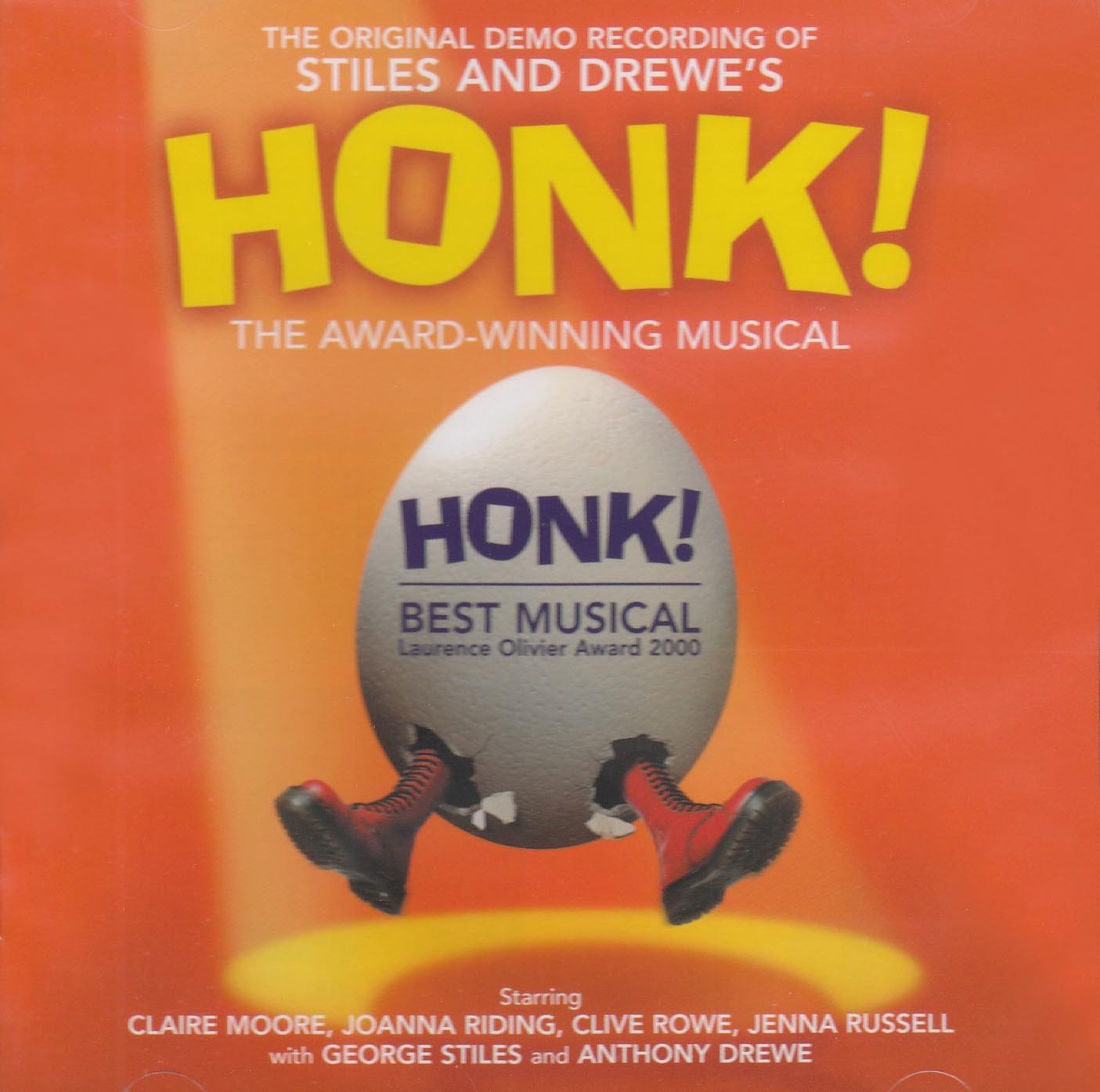
A guest blog entry from George Stiles, writer of The Three Little Pigs to be presented at this year's Festival of New Musicals.
The Three Little Pigs was written in response to a specific
brief from the Singapore Repertory Theatre. Over the past few years, they have
built up their younger audiences - from 3 years and over - with
their dedicated "The Little Company." Singapore has a huge
number of school-age children, for whom English is their first language, with
Malay, Mandarin or Hokkien as their second. SRT realised that this audience was
barely catered for with live entertainment and that, aside from large,
highly-visible branded tours, there was a lack of high quality musical theatre
material.
We quickly found a sense of liberation knowing that we
wanted the show to run at 45-50 minutes, have just 5 in the cast and be
understood by very young children as well as be enjoyed by their older
brothers, sisters, parents and grandparents. As kids, we both remember loving
Monday, September 9, 2013
FESTIVAL COUNTDOWN: Get to Know ANALOG AND VINYL
NAMT: Analog and Vinyl marks your second time as part of the Festival. What part of your experience with Emma in 2006 drew you back?
PAUL GORDON: The Festival is such a wonderful opportunity, not only to
show your work to a large theatre community, but it also allows the authors to
see their work in an entirely different light, as we are required to present
the essence of the work in 45 minutes. This forces you to truly identify
what's important in your storytelling and make hard choices. With Emma,
the big discovery was having the character of Emma break the fourth wall
through narration, a device we use today that never would have been discovered
without the Festival. The Festival directly led to many first class
regional productions of Emma and a possible Broadway future.
NAMT: Has the Festival
process so far revealed or refined anything about Analog and Vinyl?
PG: Absolutely. When you condense your script to 45
minutes you learn things about the storytelling you didn't know before. My biggest challenge with Analog and Vinyl was trying to balance the
songs between the two leading characters. Once I cut the script down, the
character of Harrison was short changed on songs at the beginning of the show,
so I decided to write a new song just for the festival called "My
Mythology.” Now I can't imagine doing the show without that song. The Festival
has already improved the show and we're not even in rehearsals yet.
NAMT: Tell us a bit about the
genesis of Analog and Vinyl.
PG: Analog and Vinyl's original title was: “Analog and Vinyl: A Jukebox Musical of Songs That Nobody Has Ever Heard of
That Were Never Hits.” (Too long?) A few years ago I decided to
write a musical based on my own catalogue of pop songs that I used to perform
myself back when I was a singer-songwriter playing clubs around Los Angeles. I
wrote the first draft of the show as an exercise for myself to see if I could
write a jukebox musical. Since I did not have access to a famous music
catalogue, I decided to use my own, which I own and control myself. So I
took one song and
Wednesday, September 4, 2013
FESTIVAL COUNTDOWN: Finding the Right Director
A guest blog entry from Jennie Redling, writer of My Heart Is the Drum to be presented at this year's Festival of New Musicals.
As a librettist and playwright, I've always considered
rehearsals to be the most exciting part of a production. It's when the
characters who have allowed me to hear and write their voices and passions and
who have lived inside and beside me are suddenly before me—alive.
In terms of preparing for rehearsal, choosing a director is,
for me, the most important part. This is a story about how we discovered a
director who is an uncannily ideal match for our NAMT presentation of My Heart Is the Drum.
You need to know that for this show I had developed a major
case of the jitters. I had become unusually attached to, and protective of, the
characters I had been writing for our musical, especially the two lead girls: a
tenderly naïve sixteen-year-old protagonist from Ghana and her equally innocent
best friend of the same age. Could the universe deliver the special person in
whose hands they would be safe and bloom?
When Branden [Huldeen, NAMT’s Festival Producing Director]
presented our team with a list of possible directors to choose from, Stacey,
Phillip and I set about learning as much as we could about them on the
Internet. I can't remember in what order I reviewed the various (fine and
highly reputable) directors, I only know (thank you, PBS Video) that the
smiling image of
Tuesday, August 27, 2013
FESTIVAL COUNTDOWN: Not Another Sinking Ship Musical
A guest blog entry from Ben Sussman, writer of Eastland to be presented at this year's Festival of New Musicals.
Years
back, when I first heard Andy White's pitch for Eastland, I was
incredulous. "Another sinking ship musical? Are you kidding
me?" The Titanic story has already been romanticized for decades,
because it has all the elements of a tabloid headline: fabulously wealthy
people, tremendous hubris, followed by karmic retribution.
And
so Andy approaches his script thoughtfully: if such a tragedy is so easily
forgotten, what does that mean about the value of these people's lives? Does their socioeconomic status make them less important? What is
the value of anyone's life? And are we really in control of our path to
the extent that we think we are?
Things shift, they change
That's life, it rearranges
And
speaking of unexpected twists -- I recently discovered that this story is
directly relevant to my own. Through genealogical research and
interviews, I learned that my own great grandfather was yet another employee
set to board the Eastland. He arrived a bit late, after the boat had
already turned over. If he had showed up 20 minutes earlier, would I even
be here to help tell the story?
Needless
to say, it was an intense and thrilling experience bringing this show into a
full production at Lookingglass Theatre last year. And now the excitement
has returned again as we begin to make cuts, dust off the score, and discuss
casting options for the NAMT production. We can't wait to spin this tale with
new voices, to an even larger audience.
Subscribe to:
Posts (Atom)